Last updated November 21, 2026
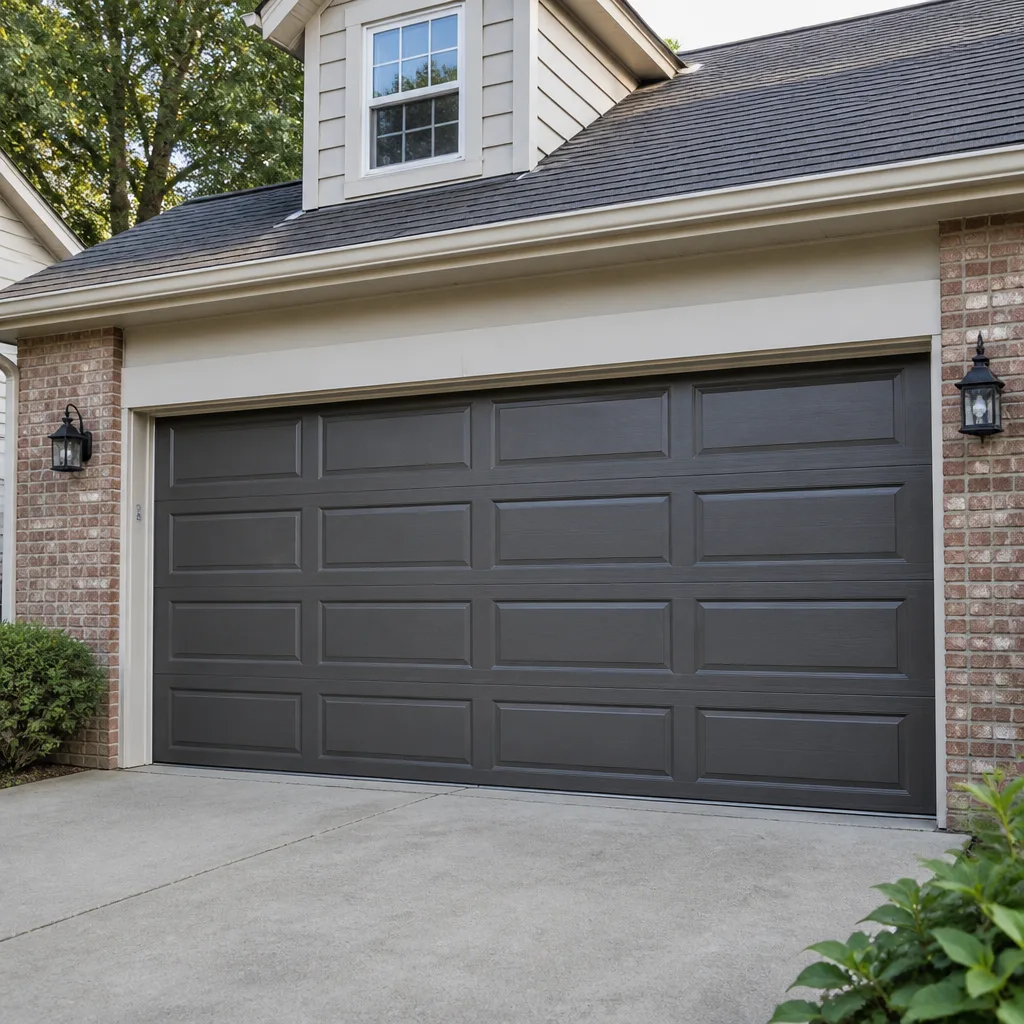 Raised-panel steel
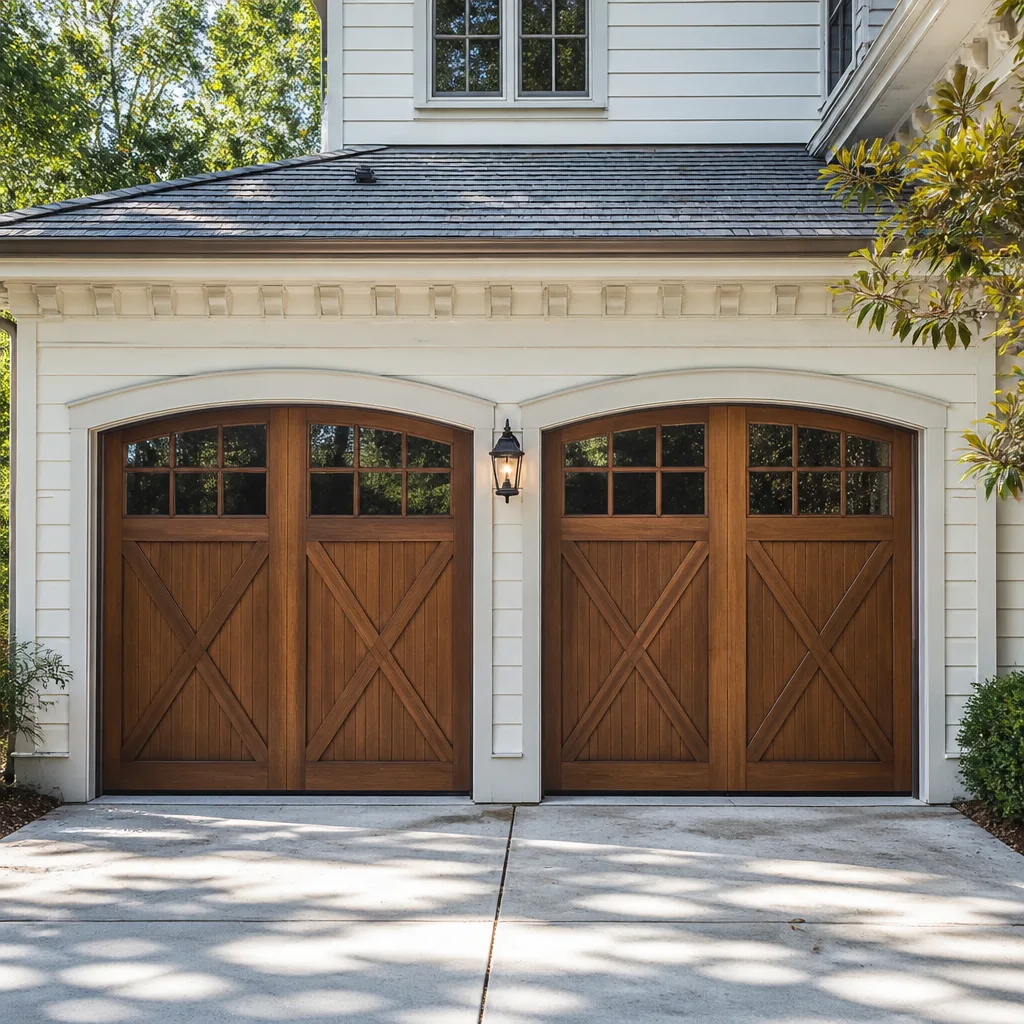 Carriage house
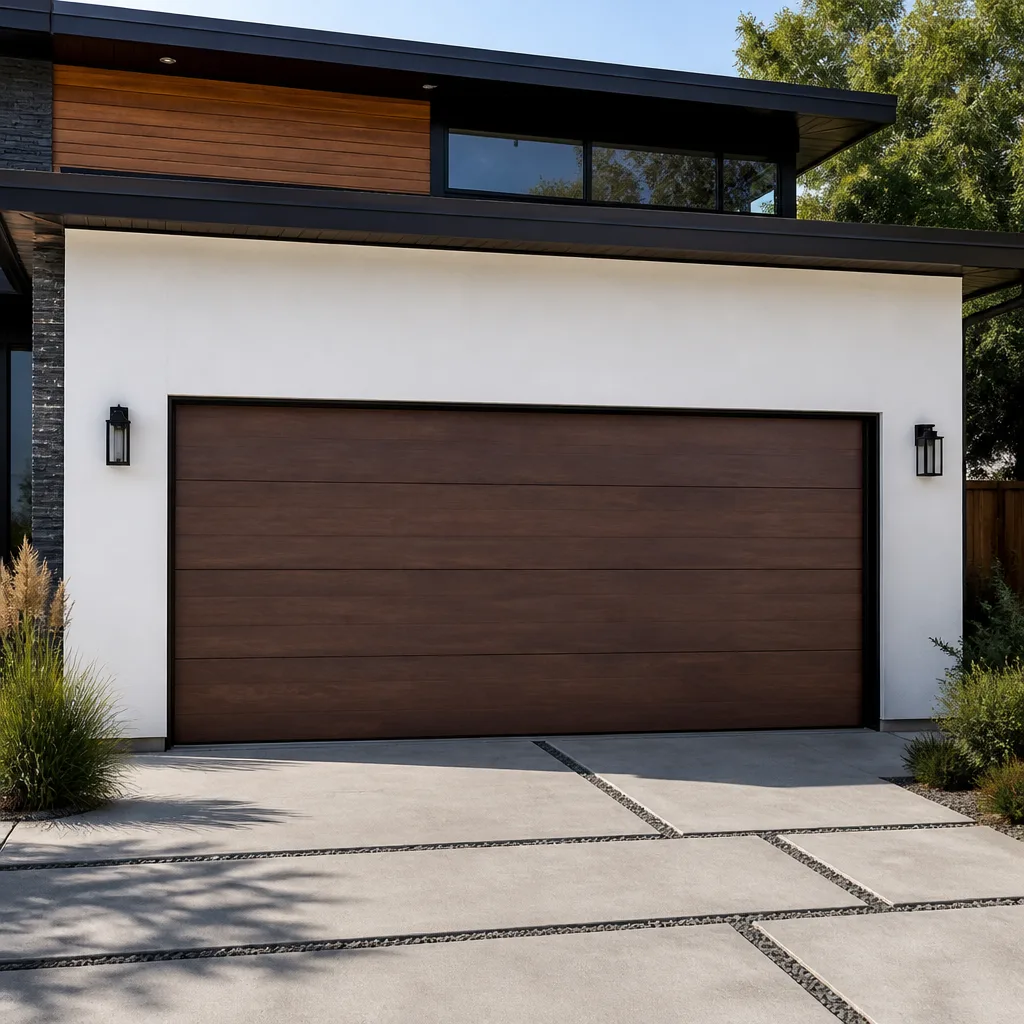 Modern flush
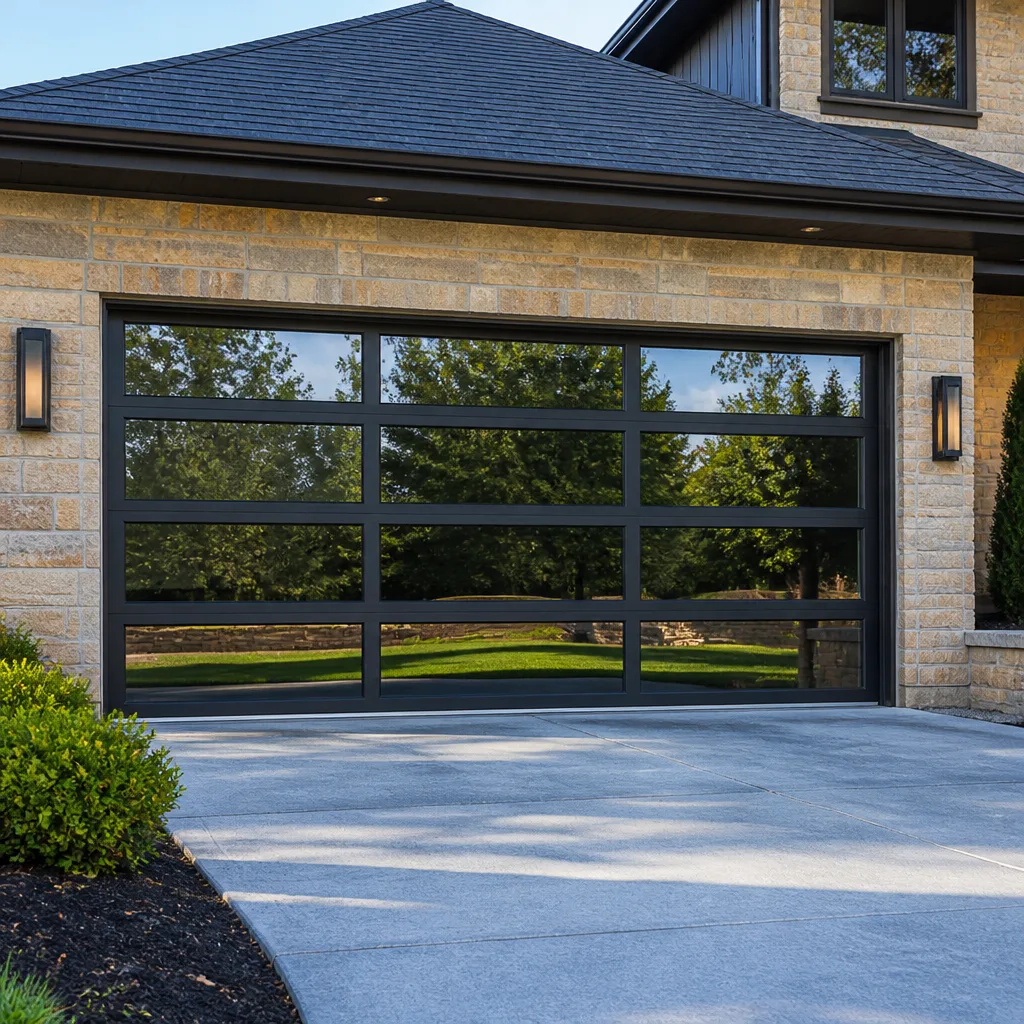 Full-view glass
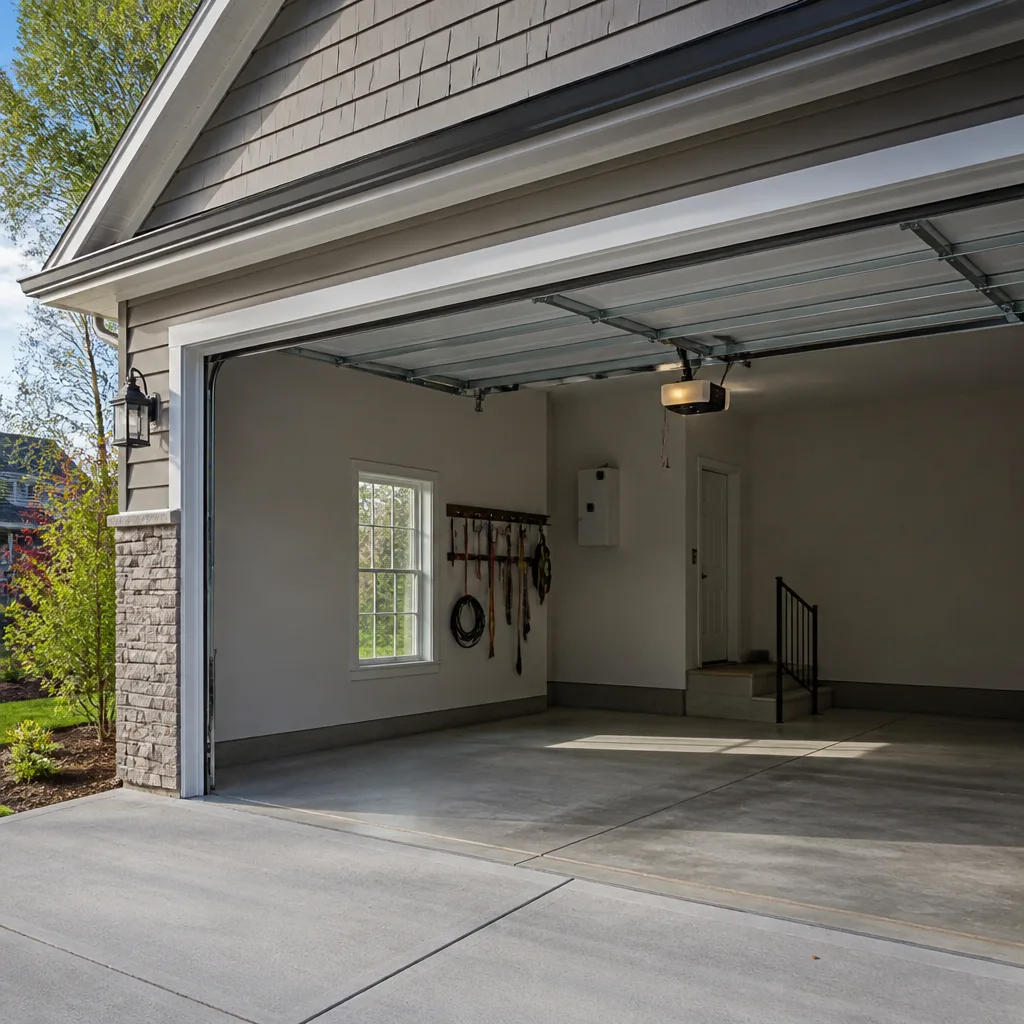 LiftMaster openers
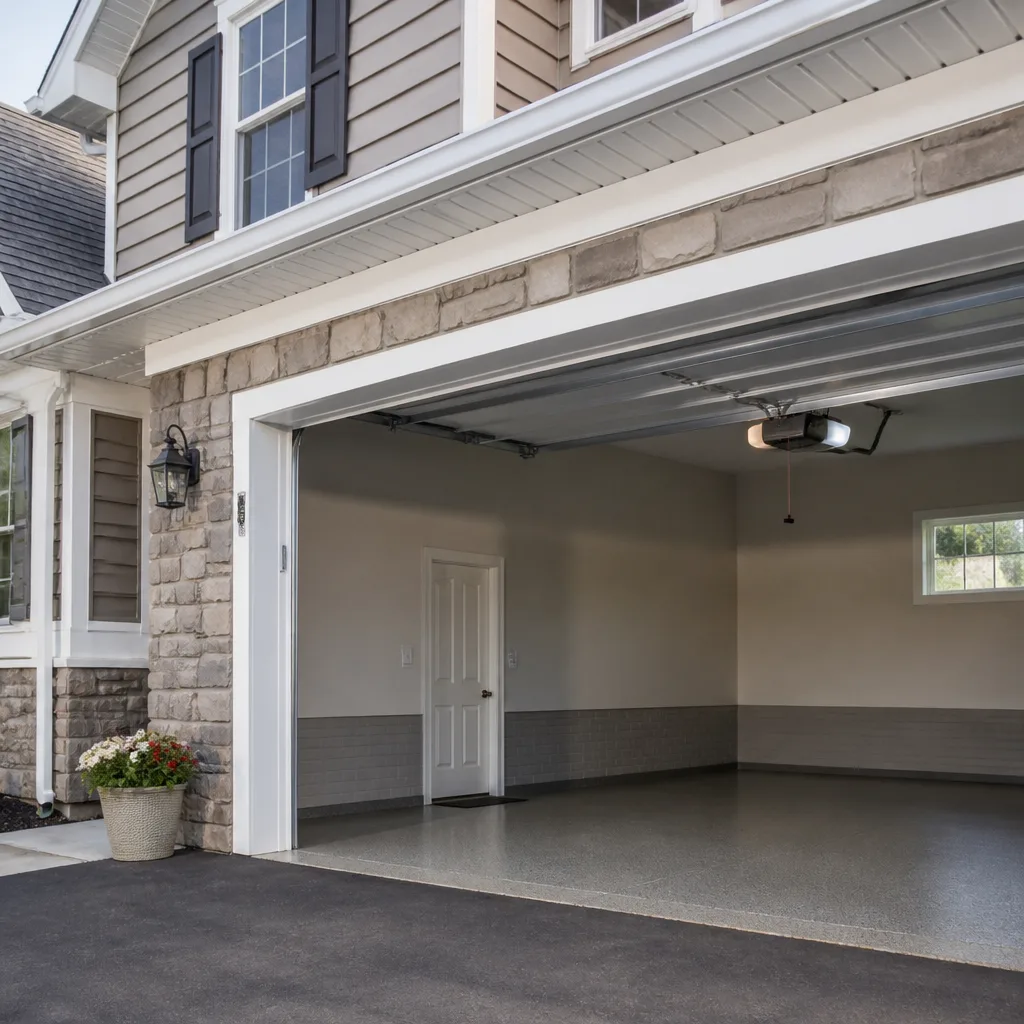 Chamberlain openers
Full 25-point door and opener safety check with every visit - springs, cables, rollers, tracks, and your LiftMaster or Chamberlain opener included
You get a price before we start. It does not change when the pro arrives.
Get your free estimateThe Complete Guide to Garage Doors in Richmond
Most “complete guides” to garage doors are written for a hypothetical homeowner in a hypothetical city. This one starts somewhere else: Richmond’s humidity swings and brick-veneer construction create failure patterns you won’t read about on a manufacturer’s spec sheet. A door that behaves in a dry climate can develop rusted hinges and swollen panels here in a few seasons. An attached garage in an older Fan District home may have a rough opening width that no current catalog door will fit without custom sizing. This guide walks through the whole system: springs, tracks, openers, panels, weatherseal, plus how Richmond’s climate, housing stock and commonly installed brands affect every repair and replacement decision you’ll face.
Quick Answer
A garage door in Richmond is a mechanical system made of five main parts: springs, tracks, rollers and hinges, the door panels, and the opener. Springs, cables, rollers, weatherseal and openers usually can be repaired or replaced individually, while bent tracks and cracked or rotted panels often need replacement. In Richmond’s climate, steel doors generally hold up longer than wood in high-humidity stretches, and older attached garages (pre-1980 construction) may need custom sizing because their openings don’t match today’s standard dimensions.
Styles & brands we work with
- Raised-panel steel
- Carriage house
- Modern flush
- Full-view glass
- LiftMaster openers
- Chamberlain openers
Table of Contents
- How Does Richmond’s Climate Affect Garage Doors?
- Why Older Richmond Homes Have Non-Standard Openings
- The Garage Door Brand Landscape in Richmond
- Steel vs. Wood vs. Composite in Central Virginia
- Springs and Cables: The Safety-Critical Parts
- How to Check Your Door’s Condition Before Calling Anyone
- Openers: Smart-Home, Legacy, and What Fits Richmond Homes
- Repair or Replace: Decision Guide
How Does Richmond’s Climate Affect Garage Doors?
Richmond’s humid summers and freezing winters put garage doors through a wider range of stress than most of the country. Summer heat and humidity cause wood panels to expand and warp, and steel panels coated in factory paint can hold up better, but any scratch or ding where bare metal is exposed becomes a rust starting point when humidity stays high for weeks. When a hard freeze arrives, weatherseal that has stiffened through the cold becomes brittle and cracks, and metal parts that expanded in July contract slightly. That cycling back and forth, season after season, is what wears out springs faster than the cycle count a manufacturer prints in the manual suggests.
We see the pattern clearly in Richmond. Doors that get regular lubrication and weatherseal checks stretch their spring life noticeably longer than doors left alone. Humidity also affects the opener: a chain or belt that runs fine in dry weather can begin to drag when wooden framing around the opener mounts swells with the summer damp. And in winter, the frost heave near the driveway apron can shift the bottom seal contact just enough to trigger a safety reversal, a door that goes back up after touching the floor because the opener thinks it hit something.
What this means practically:
- Check your weatherseal every fall, before the first freeze. If it’s hard, cracked or pulling away, it needs replacing.
- Lubricate hinges, rollers and the spring with a garage-door-specific lubricant once a year, ideally before summer.
- Watch for rust bloom on steel panels after humid stretches. Small spots caught early are a touch-up job. Spots through the panel are a replacement.
- Reschedule a door tune-up before the temperature swings that come with a Virginia spring or fall, not in the middle of the worst part of them.
None of this is about scaring anyone into a service call. It’s about knowing which failures are weather-driven and cheap to fix, and which ones are structural and won’t wait. If you’re seeing these signs, our garage door repair work covers the whole system.
Why Older Richmond Homes Have Non-Standard Openings
In Richmond, a pre-1980 attached garage is often a different animal from what a door manufacturer expects. The rough opening width and height weren’t standardized the way they are now, and builders worked with whatever framing and brick-veneer dimensions made sense for the house. That means an off-the-shelf door from a big-box retailer often won’t fit. Sometimes it’s an inch or two narrow; sometimes the headroom is different from today’s standard because the ceiling height inside the garage was never planned around the opener and track assembly a modern door needs.
Walk through a Fan District or Museum District block and you can spot the signs: garages that are clearly retrofit spaces, with door heights that don’t match their suburban counterparts, or brick openings that require a custom-sized unit or a framed insert to hold a standard one. In Richmond’s newer suburban construction out toward Short Pump or Midlothian, you’ll find standard 16-foot double doors and 8-foot singles that any manufacturer can supply off the shelf. The older areas need a measurement before anything else.
Here’s how that plays out in a real replacement project:
- Measure the rough opening (the framed space between the studs, not just the existing door), including width, height, and the headroom above the opening.
- Check side-room and back-room clearance for the track and the torsion spring assembly. Older garages often have less than a modern door needs.
- Decide between a custom-sized door and a size adjustment. Sometimes the cleaner answer is reframing the opening down to a standard size; sometimes it’s a made-to-measure panel.
- Order the door once the measurements are confirmed. This is why an installation estimate is not an impulse purchase; the sizing step comes before any order.
If a company quotes you a replacement over the phone for an older Richmond home without measuring the rough opening, ask how they’ll confirm the fit. That’s the question that separates a careful installer from a hopeful one. For the full picture of what a replacement involves, see our garage door installation page.
The Garage Door Brand Landscape in Richmond
Richmond homes are running a mix of brands, and that matters when something breaks. We service equipment from eight of the most widely installed lines in North America: LiftMaster, Chamberlain, Genie, Clopay, Amarr, Wayne Dalton, Craftsman, and Raynor. In practice, that’s what we find in Richmond garages. Clopay and Amarr doors show up often in both older homes and newer builds. Wayne Dalton doors are common in production-era subdivisions. Craftsman openers, especially in homes from the 1990s and 2000s, are still running in a lot of garages here.
Why does this matter for you? Because a brand-specific dealer can only sell what that brand makes, and a generalist handyman may not be familiar with the exact opener logic or spring setup on the system in your garage. We work on the brand already in your garage, which means a lifted panel gets replaced, a failed opener gets diagnosed on its own terms, and replacement decisions are based on fit rather than on what happens to be in stock. That’s the reasoning behind repair first, replace only when it makes sense.
A quick brand guide for what you’ll find in Richmond:
- Clopay and Amarr: Common in both new installs and older homes; steel panel doors are the majority, with parts and panel replacements generally available.
- Wayne Dalton: Frequently found in subdivisions built from the 1980s into the 2000s; openers and door hardware are both serviceable.
- Craftsman: A legacy opener line that’s still going strong in many Richmond homes. If yours is a decade-old Craftsman, parts and service are still in scope.
- LiftMaster and Chamberlain: The dominant modern opener families, including the myQ smart-home ecosystem. If your opener talks to an app, it’s likely one of these.
- Genie and Raynor: Both show up regularly and are fully covered.
Knowing the brand before you call means the technician can arrive prepared for the system in your garage rather than guessing. If you already know your brand, mention it. If not, the model label inside the opener housing or stamped on the door is enough for a start.
Steel vs. Wood vs. Composite in Central Virginia
Richmond’s humidity and temperature swing plays favorites when it comes to door material. Steel holds up best overall in this climate. Factory paint protects the panel, and modern steel doors come in insulated and uninsulated versions. The weakness is rust at any unsealed cut or scratch, which a yearly inspection catches early. Wood looks beautiful and suits the character of older Richmond homes, but it’s the most demanding material here. Wood wants to move with summer humidity and shrink back in winter, and unless it’s kept painted and sealed, it will warp, split or rot over time. Composite sits between them: more stable than real wood and rot-resistant, with a wood-grain finish that works well when an HOA or historic-district character rule restricts what you can install.
In Richmond, the choice often comes down to the house style. Historic districts and older neighborhoods reward a door that matches the original look, and a composite or wood-look steel panel can do that without the upkeep of real wood. A brick garage in the Fan District or a brick Colonial in the West End looks off with a plain white steel door, but the right composite finish blends in while asking far less of the homeowner. In suburban subdivisions, steel is the practical default and often the most cost-effective.
The main material trade-offs:
- Steel: Best durability against humidity; needs occasional touch-up; insulated versions are common for attached garages that share a wall with the house.
- Wood: Beautiful and character-appropriate; needs painting every few years; most vulnerable to humidity warping and rot in Richmond’s summers.
- Composite: Stable in humidity, resists rot, mimics wood; higher initial cost than basic steel; a good fit for older homes with finish expectations.
Whatever the material, the install quality matters as much as the panel. A poorly installed steel door rusts faster than a well-installed wood door. Our installation work covers Clopay, Amarr, Wayne Dalton and Raynor, and we’ll tell you which one fits your opening and your home rather than pushing a single brand.
Springs and Cables: The Safety-Critical Parts
A torsion spring (or a pair of extension springs, in older doors) carries the full weight of the door. That’s hundreds of pounds held under tension. When a spring breaks, the door can come down hard, and the energy released by a snapped torsion spring is genuinely dangerous. Cables are equally critical; a cable under tension can whip if it fails. This is the part of the system we flag first because it’s the part that injures people.
Here’s the safety caveat in plain terms: spring and cable work is not a homeowner job. Without the right winding bars, the correct technique, and a full understanding of how tension is loaded, the risk of serious injury is real. A trained professional replaces springs with the door in a controlled position and the tension safely unwound, and that’s not something you can replicate with a YouTube video and a ladder. We treat spring repair as a core service for exactly this reason, and we’d rather you call than try.
Signs a spring is failing or has failed:
- A loud bang from the garage, followed by a door that won’t lift.
- A visible gap in the torsion spring coil above the door, or a stretched extension spring.
- The door feels much heavier than usual when you lift it manually.
- The opener strains and stops, or reverses back down, without an obvious obstruction.
A matched pair of springs is usually replaced together, because the second spring is nearly always at a similar point in its life. When you call, ask whether the quote covers one spring or the pair, since the prices differ accordingly. Spring failures don’t wait for a convenient moment, and neither does the need for a safe fix. If you need help now, our Richmond Garage Door Repair Co team can get a technician out.
How to Check Your Door’s Condition Before Calling Anyone
You can learn a lot about your door’s health in about ten minutes, without touching the springs or cables. The balance test tells you whether the door’s weight is still carried by the springs or whether it’s overloading the opener. The visual inspection catches weatherseal, roller and panel problems early.
Run the balance test like this:
- Close the door and pull the manual release cord (which disconnects the door from the opener).
- Lift the door by hand to about halfway up, then let go.
- A balanced door stays put, or drifts only slightly. A door that drops quickly is under-supported by its springs. A door that springs up on its own is over-tensioned.
- Reconnect the release when you’re done.
Then walk around the door and check these visually:
- Springs: Look for a gap in the torsion coil or a stretched extension spring. Don’t touch them.
- Cables: Check for fraying, kinks or slack. Slack cables on one side mean something is already wrong.
- Tracks: Look for dents, bends or track sections pulling away from the frame.
- Rollers: Worn, flat-spotted or missing rollers cause noise and drag.
- Weatherseal: Check the bottom seal and the side jambs for hardening, cracking or daylight showing through.
- Panels: Look for cracks, rust-through or visible separation from the frame.
None of this requires tools, and it tells you whether the door is basically healthy, needs a tune-up, or has a problem that needs a professional now. If anything looks off, a free estimate is the fastest way to know what you’re dealing with in Richmond.
Openers: Smart-Home, Legacy, and What Fits Richmond Homes
The opener is the motor side of the system, and it fails differently than the door. A modern LiftMaster or Chamberlain with Wi-Fi and myQ can be controlled from a phone, integrated with a home automation setup, and updated over the air. A Craftsman or Genie from the 1990s still does the core job of lifting and lowering the door, but it may lack the safety sensors or the quiet belt drive that a newer unit offers. Both types of opener live in Richmond garages, often on the same street.
The question is rarely “what’s the newest opener” and much more often “is my opener the reason the door isn’t working?” A door that strains, reverses erratically, or opens a few inches and stops could be an opener problem, a balance problem, or a sensor misalignment. Diagnosing which is which saves you from replacing an opener that was fine. That’s why garage door opener repair starts with testing the door’s balance and the safety sensor alignment before anyone touches the motor.
What to consider when your opener needs attention:
- Is the door balanced? If not, the opener is working against a heavier load than it was designed for, and no opener will fix that.
- Are the safety sensors aligned and clean? A sun-facing sensor or a dirty lens will cause the door to reverse for no reason.
- Is the opener the right size for the door? An undersized opener on a heavy insulated door wears out fast.
- Do you need smart features? If a phone app or smart-home integration matters, a LiftMaster or Chamberlain myQ unit is the natural fit. If not, a basic unit does the job.
Whether your opener is a decade-old Craftsman or a new LiftMaster with Wi-Fi, the diagnosis should start with the actual system in your garage, not a generic checklist.
Repair or Replace: Decision Guide
Not every problem needs a new door, and not every new door is an upsell. The distinction matters in Richmond, where older homes with character doors and newer homes with standard steel doors have different answers. Here’s how the decision usually breaks down.
Repair usually makes sense when:
- The springs have failed but the panels and tracks are sound.
- One opener part has failed (a logic board, a safety sensor, a belt).
- A single panel is damaged and a replacement panel in the same make and model is available.
- The weatherseal or rollers are worn but the door itself is in good condition.
Replacement usually makes sense when:
- Multiple panels are dented, cracked or rusting through.
- The door is out of balance even with good springs, or the tracks are bent beyond safe realignment.
- Repairs across multiple parts add up to a significant share of a new door’s cost.
- An older home’s opening needs custom sizing that only makes sense with a full replacement.
The rule we go by: repair first, replace only when it makes sense. That’s the reason we’re a multi-brand specialist and not a single-brand dealer. We don’t have an inventory reason to talk you into a new door. The written estimate you get is the price you pay, and it’s quoted and agreed before any work begins.
Common Mistakes to Avoid
- Assuming an off-the-shelf door will fit an older Richmond home. Pre-1980 garages often have non-standard opening dimensions. Measure the rough opening before you order anything, or a custom door becomes the only option after a costly return.
- Assuming a door that won’t lift is an opener problem. A failed spring can make a healthy opener seem broken. Check the door balance first before replacing the motor.
- Putting off weatherseal replacement through a Richmond winter. Cold-stiffened seal cracks and lets in water that accelerates rust and rot. A small seal job is far cheaper than a panel replacement.
- Choosing a door material based on how it looks in a showroom rather than how it behaves in Virginia humidity. Real wood looks great on day one but needs regular sealing in this climate. Steel or composite asks less of the homeowner.
- Calling a general handyman for a spring or cable repair. This is the most safety-critical part of the system. A trained specialist does it safely; a generalist may not.
- Replacing an opener without checking whether the door is the real problem. An unbalanced door will wear out a new opener too. Fix the door first.
- Assuming your Richmond neighborhood’s new-build sizing matches an older home across town. Standard 16-foot doors are common in newer subdivisions but not in older attached garages. Confirm your opening size before quoting a replacement.
See the difference
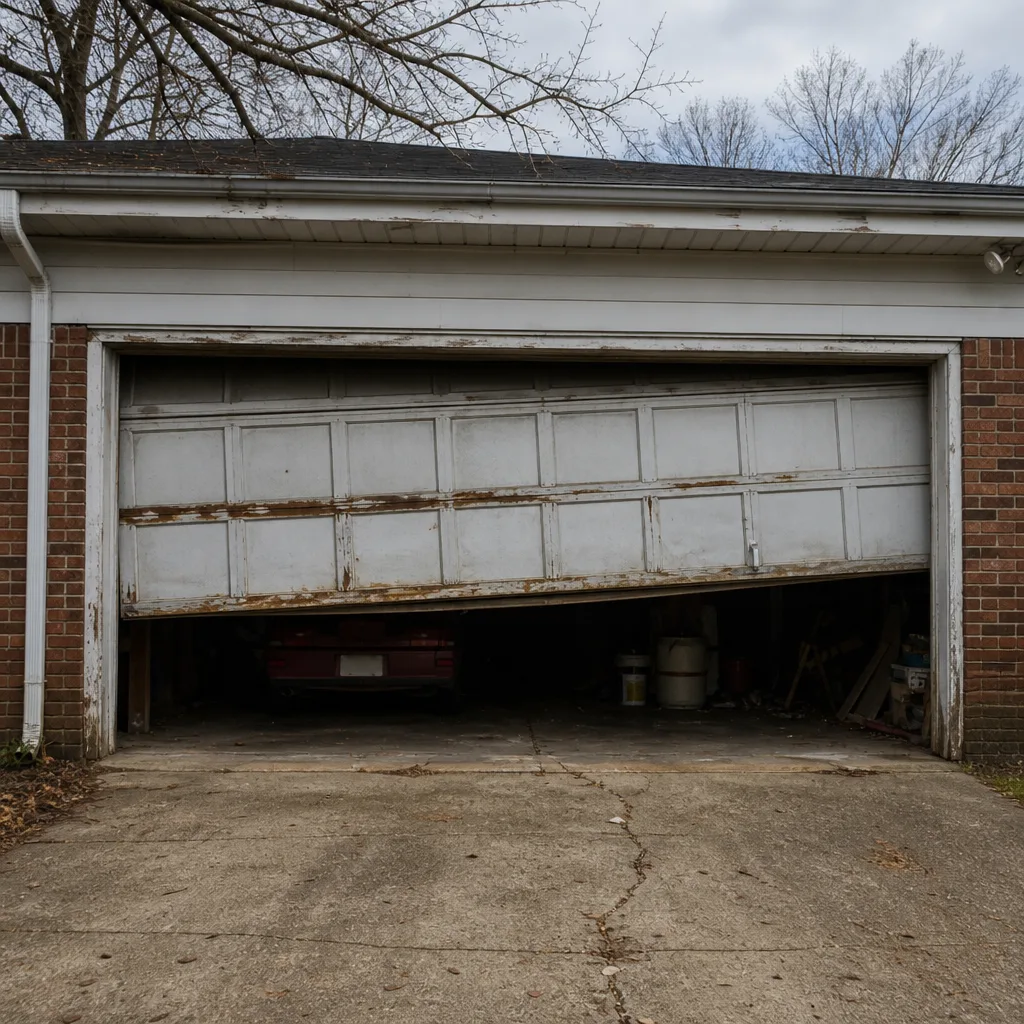 Before
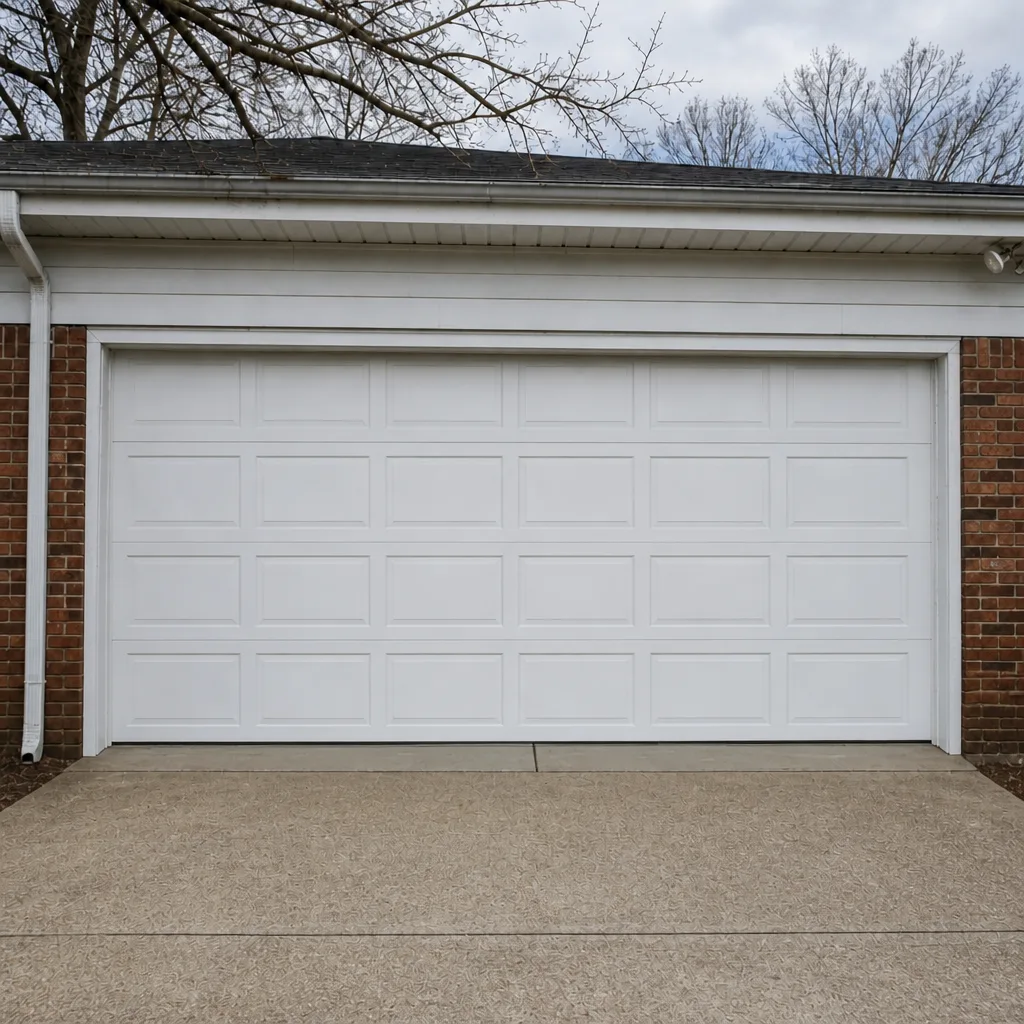 After
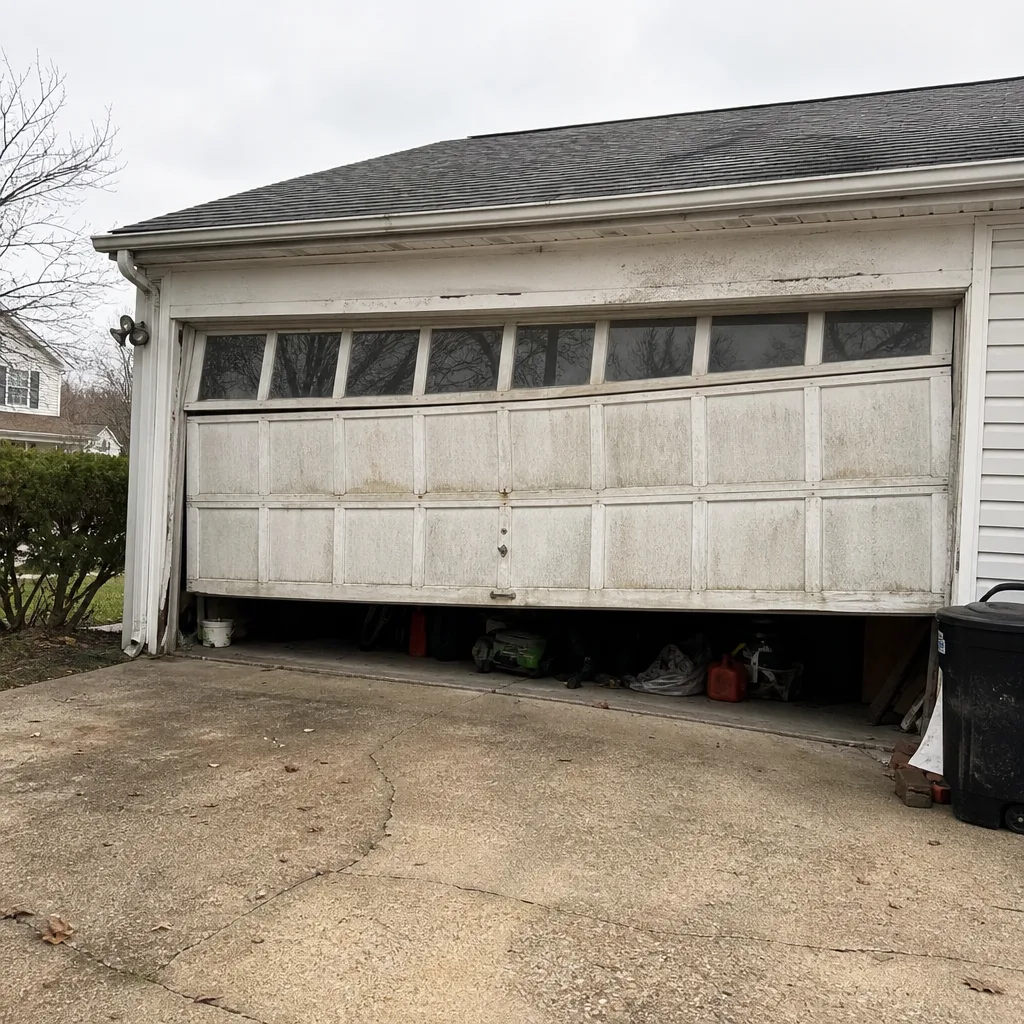 Before
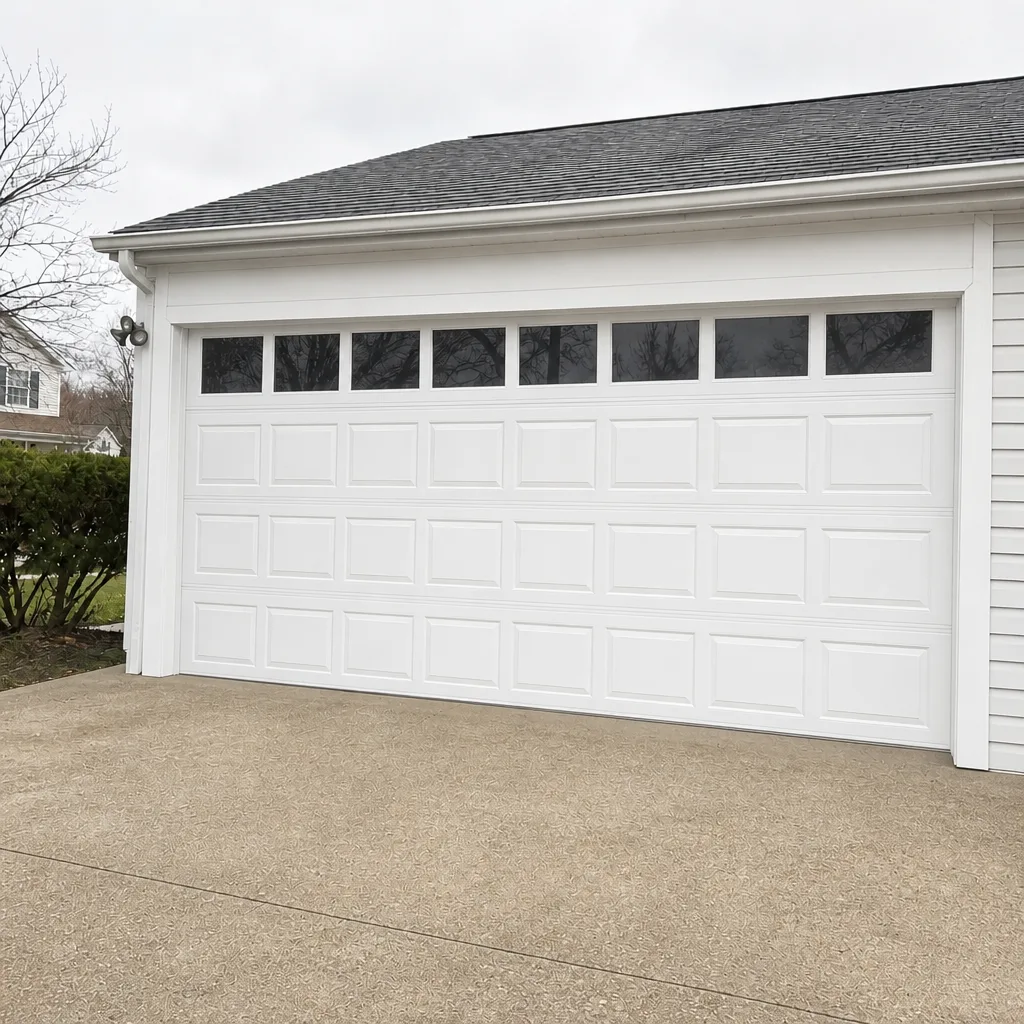 After
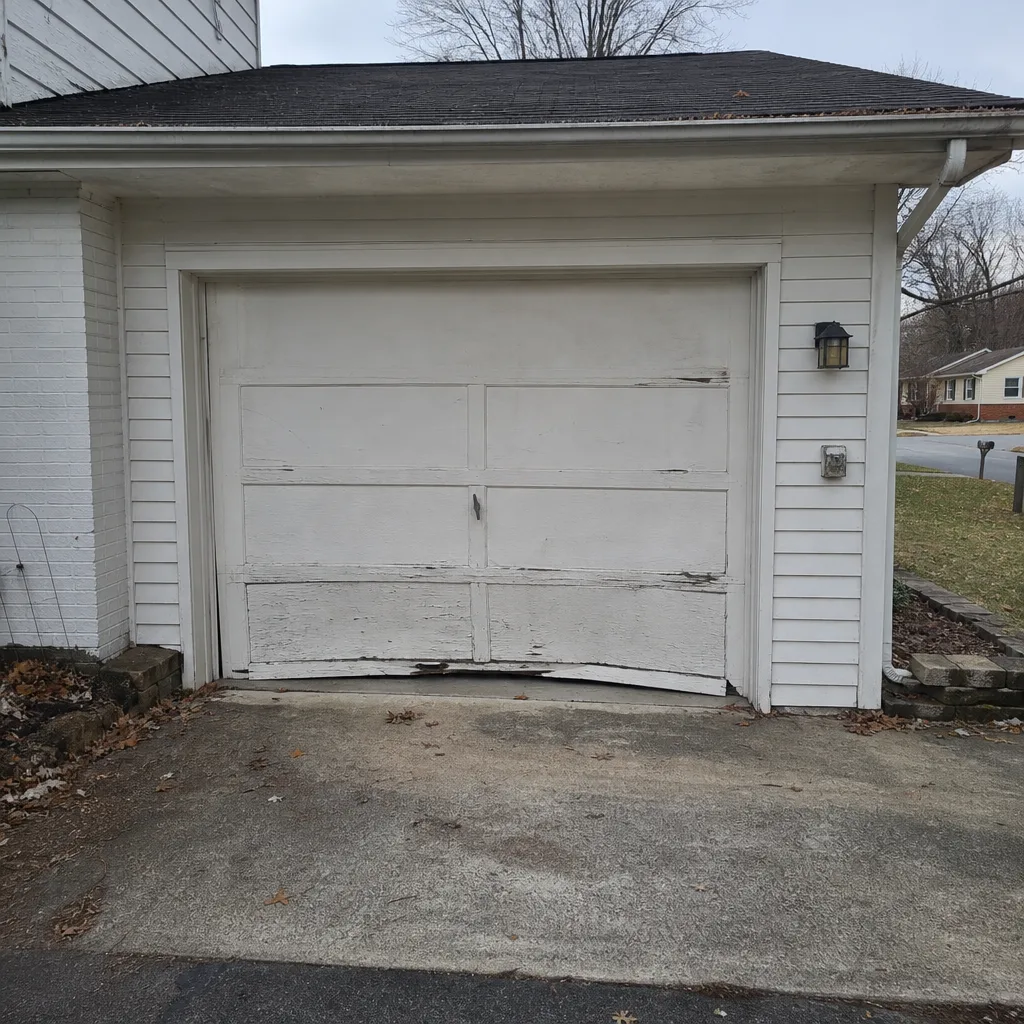 Before
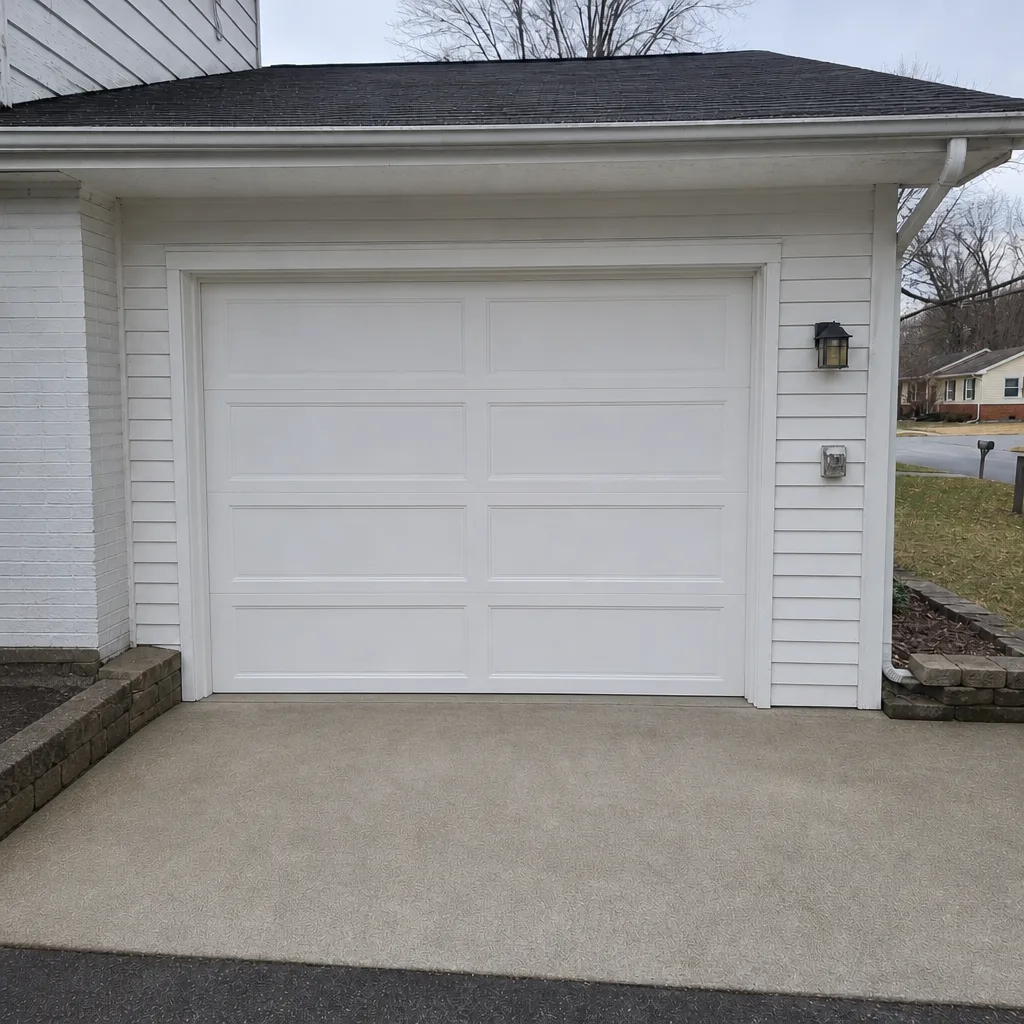 After
When to Call a Professional
Call a professional the moment you see any of these signs: a snapped torsion spring, a door that won’t lift off the ground, a frayed or slack cable, a track that has bent or pulled away, or a door that reverses for no apparent reason. If a door is stuck open, that’s a security gap worth prioritizing, and if a door is stuck closed on a car, it’s an access problem. Spring and cable work should only be done by a trained technician, and a door that’s visibly out of balance should be looked at before the opener or the door is used again. For smaller issues, a tune-up catches wear early and extends the life of the whole system. If you’re facing a snapped spring on a Saturday, call and we’ll book you for Sunday, since we’re closed Saturday and open Sunday through Friday.
Richmond Garage Door Repair Co offers free estimates in Richmond. Call (833) 508-9230 for a written price before any work starts.
Frequently Asked Questions
Most garage door repairs in Richmond fall into a range of roughly $150 to $600 depending on the part: a spring replacement is toward the upper end, weatherseal and roller repairs toward the lower. A matched pair of springs typically costs more than a single spring. The written estimate sets the final price, quoted and agreed before any work begins. Call (833) 508-9230 for an exact quote; estimates are free.
Often, yes. We’re open Sunday through Friday, 7am to 7pm, and closed Saturday, and emergency service exists for doors that create a security or access problem. Call in the morning and a technician can usually be scheduled that day. Call (833) 508-9230 to check availability.
The most common causes are a misaligned safety sensor, a hardened weatherseal that stops the door short, or an out-of-balance door triggering the opener’s reversal. A balance test and a sensor check usually point to the cause. If the door goes back up after touching the floor, don’t force it repeatedly. Call (833) 508-9230 for an estimate.
Pull the manual release, lift the door to waist height by hand, and let go. A balanced door holds or drifts slightly; a door that drops fast is under-supported by its springs; one that springs up is over-tensioned. Reconnect the release after. If the door fails the test, call us for a check.
Yes. The local professionals we connect you with are state-licensed and insured as Virginia requires, and our technicians have up to 13 years of experience. We work on the brand already in your garage, from LiftMaster and Chamberlain to Genie, Craftsman, Clopay, Amarr, Wayne Dalton and Raynor. Call (833) 508-9230 for a free estimate.
Yes. Older attached garages in the Fan District and similar neighborhoods often have non-standard opening sizes, so we measure the rough opening before quoting a replacement. We also service the legacy openers and manual systems common in those homes. The written estimate is quoted and agreed before any work starts. Call (833) 508-9230 for a free estimate.
The Bottom Line
A garage door is a system, not a single part, and in Richmond that system gets tested by humidity swings, hard freezes and older homes with non-standard dimensions. Springs, tracks, openers, panels and weatherseal fail on their own schedules, and knowing which are repairable versus replaceable saves money. The guide’s big points: steel and composite generally weather Richmond’s climate better than wood; pre-1980 garages often need custom-sizing; the eight common brands in Richmond all stay in service; and spring failures are always a professional job. When in doubt, get a written estimate before agreeing to anything.
If you’re ready for a real look at your door, Richmond Garage Door Repair Co offers free estimates in Richmond. Call (833) 508-9230 to schedule a measure, a repair, or a review of your system.
Written by the team at Richmond Garage Door Repair Co.